

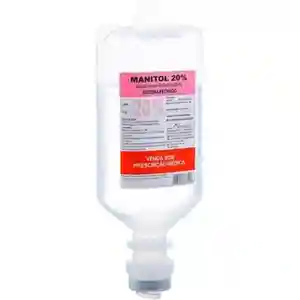
Mannitol 20%
Mannitol 20% is a hypertonic intravenous solution containing 200 grams of mannitol per liter (i.e., 20 g per 100 mL)
SOLD ON PRESCRIPTION ONLY!
- Estimated Delivery : Up to 4 business days
- Free Shipping & Returns : On all orders over $200
Mannitol 20%
Mannitol 20% is a hypertonic intravenous solution containing 200 grams of mannitol per liter (i.e., 20 g per 100 mL). It is a powerful osmotic diuretic and is commonly used in emergency and critical care to:
-
Lower intracranial pressure (ICP) due to cerebral edema
-
Reduce intraocular pressure (IOP) in acute glaucoma
-
Promote urine production in early acute kidney failure
-
Assist in eliminating toxic substances through the kidneys
Mechanism of Action
Mannitol works by drawing water out of cells and into the bloodstream through osmosis. This:
-
Reduces swelling in the brain or eyes
-
Increases plasma volume and renal blood flow
-
Promotes diuresis (urine production)
Uses of Mannitol 20%
-
Cerebral edema (brain swelling due to trauma, stroke, or infection)
-
Raised intraocular pressure (e.g., acute glaucoma, before eye surgery)
-
Oliguria in acute kidney injury (to test or promote kidney function)
-
Forced diuresis in drug poisoning (e.g., salicylate or barbiturate overdose)
Typical Dosage (Adults)
-
Cerebral edema/intracranial pressure:
1.5–2 g/kg as a slow IV infusion over 30–60 minutes
Repeat every 6–8 hours if needed -
Intraocular pressure:
1.5–2 g/kg IV 30–60 minutes before surgery or treatment -
Renal test dose:
0.2 g/kg over 3–5 minutes to test kidney response
Note: Mannitol 20% is administered intravenously through a filter to avoid injecting crystals.
Side Effects
Common:
-
Headache
-
Nausea
-
Vomiting
-
Dizziness
Serious (requires immediate attention):
-
Electrolyte imbalance (low sodium or potassium)
-
Pulmonary edema (especially in heart failure)
-
Heart strain (due to fluid shift)
-
Confusion or seizures (especially in kidney failure)
Contraindications (Do Not Use If…)
-
Complete kidney failure (anuria)
-
Severe heart failure or lung congestion
-
Severe dehydration
-
Active brain bleeding (except during surgery)
-
Severe electrolyte imbalances
-
Known allergy to mannitol
Precautions and Monitoring
-
Always check for crystals in the solution; warm gently to dissolve if needed.
-
Must use a filter needle or filter IV set.
-
Monitor:
-
Serum electrolytes (sodium, potassium)
-
Kidney function (urine output, creatinine)
-
Fluid balance and vital signs
-
Signs of heart or lung complications
-
Storage and Handling
-
Store below 25°C; do not freeze.
-
If crystals form, warm the solution to dissolve and shake gently.
-
Do not use if crystals persist or solution is discolored.
Key Differences from Mannitol 10%
| Feature | Mannitol 10% | Mannitol 20% |
|---|---|---|
| Strength | 100 g/L | 200 g/L |
| Osmotic effect | Moderate | Stronger |
| Common use | Mild/moderate cases | Emergencies, rapid effect |
| Volume required | Larger volumes needed | Smaller volume effective |
Only logged in customers who have purchased this product may write a review.
Related products
-
-

-
-
Dextrose 4.3%
₵25 -






Reviews
There are no reviews yet.